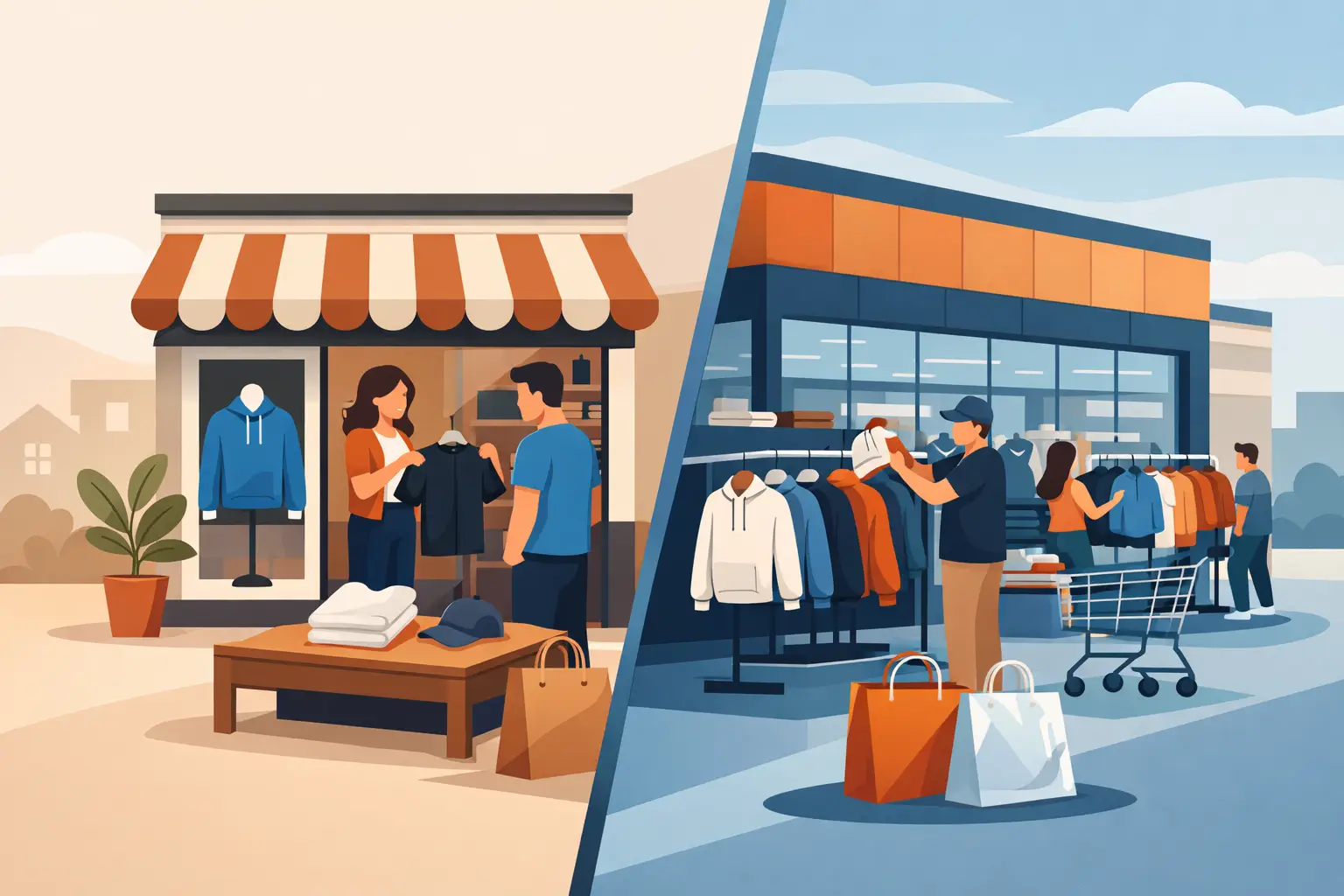
Small Business vs Big Box Apparel
You can feel the difference before you even check the tag. That is what makes small business vs big box apparel more than a price comparison. It is a choice about what kind of quality you expect, what kind of business you want to support, and whether the shirt on your back actually says something about who you are.
For a lot of folks, apparel is not just fabric and thread. It is what you throw on before heading to the lake at sunrise, firing up the grill with family, or meeting buddies at deer camp. It ought to fit your life. And if your values matter, where that apparel comes from starts to matter too.
Why small business vs big box apparel feels different
Big box stores are built for scale. They move huge volumes, chase broad trends, and try to appeal to nearly everybody at once. That model is efficient, and sometimes it gives shoppers a quick, cheap option when they need something fast.
But scale usually comes with trade-offs. Designs get safer. Materials can get thinner. Fit gets more generic. Brand identity gets watered down because the goal is not to serve a tight-knit community. The goal is to sell to as many people as possible.
Small businesses work from the opposite direction. They tend to start with a point of view, a way of life, or a community they know well. That means the apparel often feels more personal because it was made with a real customer in mind, not a made-up average shopper in a boardroom.
That does not automatically mean every small brand is better at everything. Some have limited inventory. Some charge more. Some cannot match the speed or convenience of a national chain. But when a small business gets it right, the difference shows up in the details people actually care about – comfort, design, message, and trust.
The real differences in quality, design, and meaning
When people compare price tags, they often miss the bigger picture. A cheaper tee is not always a better value if it twists after two washes, shrinks into an awkward fit, or fades so fast the graphic looks worn out by month two.
Big box apparel is often made to hit a target price first. That usually shapes every decision after that. Fabric weight, stitching, print quality, and finishing details may all be trimmed down to protect margins. Again, not every item is low quality, but the business model puts constant pressure on cost.
Small businesses usually do not win by being the cheapest. They win by being more intentional. Better blanks, better feel, stronger graphics, and more focused production runs can make a shirt or hoodie feel like something you want to keep wearing, not something you settle for because it was on an endcap.
Design is another major split. Big box stores often chase whatever has the broadest appeal. That can leave you with graphics that feel flat, trendy in a forgettable way, or disconnected from real life. Small brands are more likely to create apparel around identity. That matters if you want gear that reflects hunting season, fishing trips, faith, family, country, military pride, or the values you were raised on.
That kind of connection is hard to mass-produce. It comes from actually knowing the customer, not just studying purchasing patterns.
What you are really paying for
A lot of people assume big box means better value because the upfront cost is lower. Sometimes that is true if you need a basic item for a short-term use. If you forgot a sweatshirt for a weekend trip and just need something now, convenience may win.
But value is not just about the receipt. It is about how often you wear the item, how well it holds up, and whether you still like it six months later. A hoodie that costs more but becomes your go-to for cool mornings, campfire nights, and everyday wear can earn its keep fast.
There is also another layer that does not show up in a simple price comparison. When you buy from a small business, more of that purchase tends to support real people behind the brand – families, workers, creators, and communities that care about staying in the fight. That matters to a lot of Americans right now.
If you believe where your dollars go says something about what you stand for, then small business vs big box apparel is not a small decision at all.
Small business vs big box apparel and shared values
This is where the gap gets wider.
Big box retailers are built to stay neutral enough to sell to everybody. That usually means avoiding strong identity, strong values, or strong points of view unless those things are trending and profitable. The result is apparel that may look fine but rarely feels rooted in anything real.
Small apparel brands can do something different. They can speak directly to people who love the outdoors, back this country, support veterans, care about family, and want to wear something that feels true to their everyday life. They are not trying to please every market segment in America. They are trying to serve their people well.
That creates a stronger kind of loyalty. Not because shoppers are being sold a slogan, but because they recognize themselves in the brand. They see familiar values. They feel understood. They buy from a business that sounds like home.
For an identity-driven category like graphic hoodies and tees, that connection matters a lot. Folks are not just buying warmth or coverage. They are buying expression. They are saying, this is who I am, this is what I believe, and this is the life I live.
Where big box still has an advantage
To be fair, big box stores are good at a few things, and pretending otherwise does not help anybody.
They usually offer immediate availability, broad size ranges across many categories, and aggressive pricing. If you need five plain shirts in one trip along with dog food, paper towels, and motor oil, they serve a purpose. Convenience is real.
They also tend to have easier in-person returns, which some shoppers prefer. And if your style needs are simple and you are not looking for anything meaningful or long-lasting, a mass retailer may check the box.
The issue is that convenience can become a habit. A lot of people buy whatever is easiest, then wonder why their closet is full of clothes they do not care about. Fast purchasing often leads to forgettable apparel.
That is the trade-off. Big box wins on speed. Small business often wins on purpose.
Why limited runs and focused collections matter
One thing small brands do especially well is make apparel feel like it belongs to a moment. A limited-edition drop tied to hunting season, summer on the water, or proud American themes can carry a kind of meaning you will never get from a generic rack of mass-produced shirts.
That approach is not just about urgency. It is about relevance. Focused collections feel closer to real life because they are built around the things people actually care about. They are not trying to cover every trend for every shopper in every zip code.
For customers, that can make buying feel less like grabbing another shirt and more like finding one that fits their story. That is a big reason brands like HoodyTee resonate. The product is wearable, sure, but it also feels personal.
How to decide what is right for you
If you are choosing between small business vs big box apparel, the best answer depends on what you want out of your clothes.
If your top priority is the cheapest possible option today, big box will often win. If your priority is comfort, better design, values, and apparel that actually reflects your lifestyle, small business usually brings more to the table.
Ask yourself a few plain questions. Do you want clothes you will wear because they were cheap, or because they feel like you? Do you care where your money goes? Do you want your hoodie or tee to hold up, start conversations, and represent something beyond a quick transaction?
That does not mean every purchase has to be serious. But it does mean your best pieces probably come from brands that know exactly who they are making them for.
The shirt in your drawer may seem like a small thing, but what you wear carries your name, your values, and your way of life out into the world. Buy the kind that feels worth standing behind.

One Comment