Bowhunting Hoodies vs Camo Jackets
That first cold sit of the season tells the truth fast. If your shoulders are tight, your draw feels bulky, or the wind cuts through before sunrise, the question of bowhunting hoodies vs camo jackets stops being about style and starts being about staying focused when the moment comes.
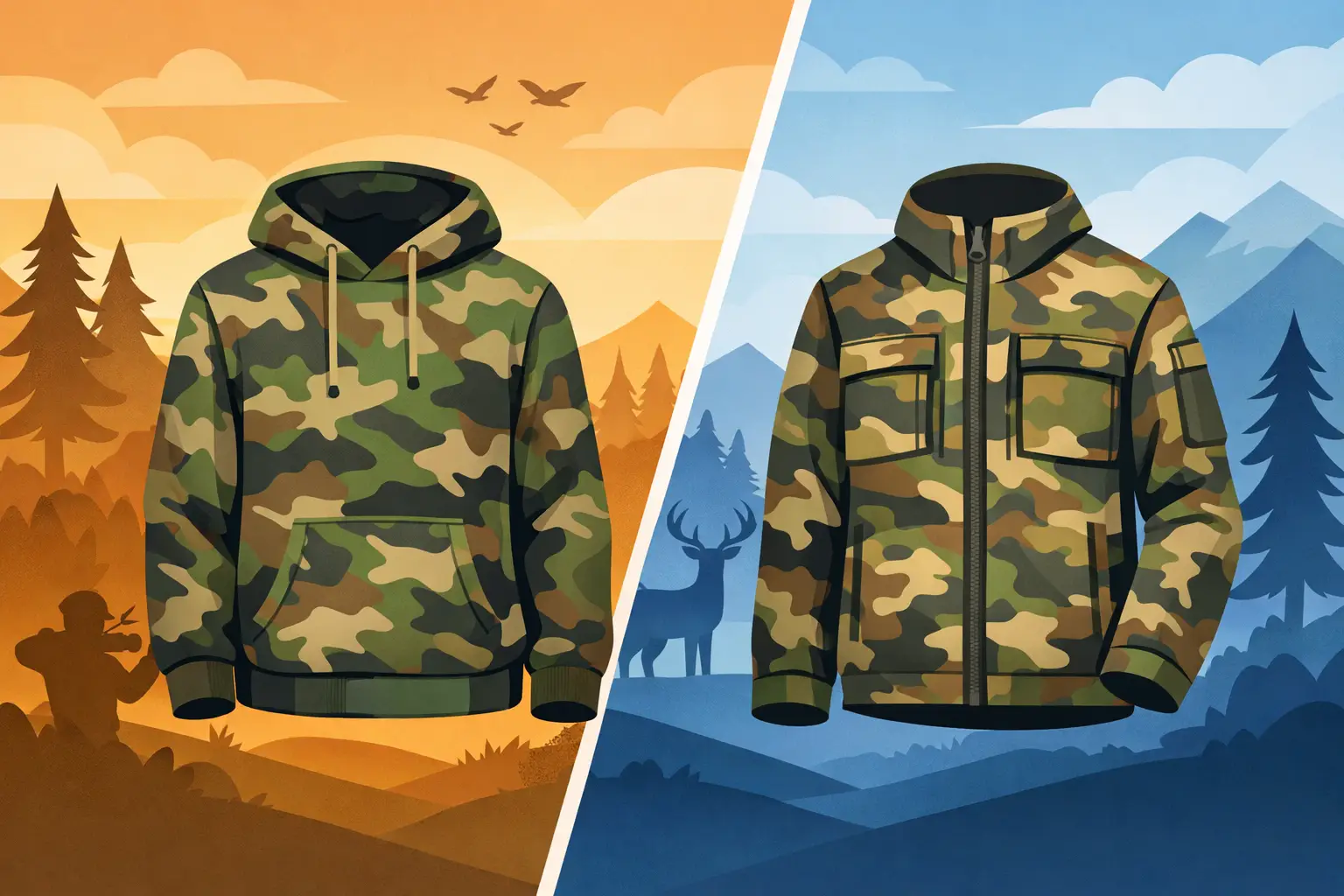
For most bowhunters, this is not an either-or argument. It is a matter of timing, weather, movement, and how you hunt. A good hoodie can feel like home in the woods – quiet, comfortable, easy to wear, and built for long hours without a lot of fuss. A solid camo jacket earns its place when the temperature drops, the wind picks up, or the forecast turns ugly. The right choice depends on what the day demands and how much gear you want working against you.
Bowhunting hoodies vs camo jackets in real conditions
A bowhunting hoodie shines when you need freedom. Early season hunts, cool mornings, mild afternoons, scouting trips, and mobile setups all lean in its favor. Hoodies tend to move with you better, especially when you are drawing a bow from awkward angles or climbing into a stand before daylight. They usually feel less stiff than jackets, which matters when every little restriction shows up in your shoulders and elbows.
They are also easier to live in beyond the hunt. A good hunting hoodie can go from the truck to camp to town without feeling overbuilt. For hunters who like gear that pulls double duty, that matters. You are not buying something that only comes out three weekends a year.
Camo jackets step up when protection matters more than flexibility. Late season, exposed ridges, cold rain, steady wind, and all-day sits are where a jacket starts to separate itself. If the weather is going to work against you for hours, a jacket usually offers more insulation, better wind resistance, and stronger defense against brush, moisture, and rough conditions.
The trade-off is bulk. Some jackets are cut well and bowhunter-friendly, but plenty of them still feel like too much when you are trying to draw cleanly or stay silent in close cover. Extra pockets, heavier fabric, and thicker insulation can all help in bad weather, but they can also get in the way if conditions do not justify them.
When a hoodie is the better bowhunting layer
There is a reason so many hunters reach for a hoodie first. Comfort counts. If you are still-hunting edges, checking trail cameras, slipping into a saddle setup, or hunting the kind of weather that starts crisp and warms up by mid-morning, a hoodie often feels like the smartest call.
Noise is part of the conversation too. Many hoodies stay quieter than technical outerwear, especially when you are brushing past limbs or shifting at full draw. Bowhunters know that little sounds matter at close range. If your clothing whispers every time you move, that buck at 20 yards might hear it before you ever settle the pin.
A hoodie also layers well without getting complicated. You can wear a base layer underneath on cool mornings and strip down as the day warms up. That simple system works because it does not ask much from you. Put it on, hunt hard, and stay mobile.
This is also where everyday wear enters the picture. Some gear is made only for the woods. Other pieces fit the hunting life more broadly. A quality hoodie can carry that sense of identity off the mountain and back into daily life. That matters to hunters who do not separate who they are from how they dress.
When a camo jacket earns its keep
A camo jacket makes sense when weather becomes a real factor, not just an inconvenience. If you are heading into late November, sitting through wind chill, or hunting from dawn to dark, a jacket can preserve energy in ways a hoodie simply cannot.
Warmth is only part of it. Jackets often offer better structure in wet and windy conditions. If the outside fabric sheds light rain and blocks gusts, your base layers get to do their job. You stay dry longer, and dry hunters stay patient longer.
Durability can tip the scale too. If you are busting through cedar, carrying a pack through rough country, or dragging game through thick cover, a jacket usually takes abuse better than a softer hoodie. That does not mean hoodies are fragile. It just means jackets are often built with harsher conditions in mind.
Still, more protection can mean less versatility. A heavy jacket may be exactly right at daybreak and way too much by 10 a.m. If your hunts involve hiking in, climbing hard, or changing elevations, overheating becomes its own problem. Sweat now means chill later, and that can turn a good hunt into a long miserable sit.
Fit, draw cycle, and why bulk matters
Bowhunters do not need clothing that looks tough. They need clothing that disappears when it is time to shoot. That is where fit matters more than most people admit.
A hoodie usually wins on natural movement. The softer construction tends to keep the draw cycle cleaner, especially through the shoulders and upper back. If you shoot in a hoodie all summer and switch to a bulky jacket in November, you may feel the difference the first time you come to full draw.
Sleeve length, cuff design, and chest room all matter here. Loose fabric can catch a string or slap against your release arm. Too much insulation across the shoulders can shorten your range of motion. A jacket can absolutely work for bowhunting, but it has to be chosen with the shot in mind, not just the temperature.
That is why many hunters keep the jacket for the walk in, then scale down once they are settled. Others build a smart layering system around a hoodie and add outerwear only when conditions truly call for it. The best setup is the one that lets you move naturally and stay in the stand longer.
Bowhunting hoodies vs camo jackets for each season
Early season usually leans hoodie. Temperatures are milder, your body heat builds fast on the walk in, and mobility is king. In those conditions, a hoodie over a light base layer is often enough.
Mid-season is where things get less clear-cut. Cool mornings and warmer afternoons make layering more important than any single garment. A hoodie may still be the better core piece, with a vest or packable shell available if the weather shifts.
Late season is jacket country more often than not. Once cold becomes the main threat, insulation and wind resistance matter more than minimal bulk. Even then, some hunters still wear a hoodie underneath because it keeps the system comfortable and less restrictive than a jacket alone.
Rain changes everything. A hoodie can handle light mist for a little while, but if the forecast calls for steady precipitation, a jacket with weather protection becomes the practical choice. No amount of toughness makes wet clothes comfortable after three hours in a stand.
The best choice is usually a system, not a side
If you are trying to settle the debate once and for all, here is the honest answer: most serious hunters need both. A hoodie covers a lot of ground and often gets more wear, but a jacket still has a job when the weather gets serious.
The better question is which piece deserves to be your foundation. For a lot of bowhunters, that answer is the hoodie. It is easier to move in, easier to layer, and easier to wear from one part of your life to the next. That kind of versatility matters when you want gear that fits the hunt and the lifestyle around it.
At HoodyTee, that idea runs deep. The best outerwear is not just something you throw on. It should feel like it belongs to the life you live – mornings in the stand, evenings by the fire, weekends with family, stories told around the truck after a long day outdoors.
A camo jacket still belongs in the lineup. Just do not expect it to win every hunt. Some days call for protection. Other days call for freedom. Knowing the difference is what keeps your gear working for you instead of against you.
Pick the layer that helps you stay warm, stay quiet, and make a clean shot when it counts. That is what matters when daylight breaks and the woods finally come alive.